
Every time retreat dates open, my WhatsApp fills with a version of the same message: “I really want to come… but what actually happens there? I've never done anything like this.”
I understand the hesitation. The word retreat carries baggage — some people picture bootcamp discipline and 4 a.m. bells, others picture something so spiritual they will feel like an outsider. A Soul Bloom weekend is neither.
The days begin early, but gently — with sunrise practice outdoors, because the first light and the birdsong do half of my teaching for me. Movement first, then breathwork while the body is warm and the mind is still quiet. Nobody performs. Beginners practise beside experienced students and both are adapted to on the spot.
Meals are shared and unhurried. This surprises people — how much of the healing happens at the table, in slow conversations with people who were strangers on Friday. Groups stay small on purpose; you will know everyone's name by the first evening.
The middle of the day belongs to workshops — and this is where Soul Bloom retreats differ from most. Alongside yoga and meditation, we practise creative healing: journaling, movement, art, sound. Expression reaches places that talking alone cannot. You do not need to be 'creative' — you need a pen and honesty.
There is also silence — walks without phones, unstructured hours with nothing scheduled against them. If you have not had an unscheduled hour in months, this is often the part people remember longest.
Evenings close quietly: satsang — sitting together, sometimes with music or sound, sometimes with questions — and early nights. Sleep comes differently when the day has moved through your whole body.
What you don't need: flexibility, experience, the right clothes, or any belief system. Complete beginners are welcome at every Soul Bloom retreat, and every practice bends to the bodies in the room, never the other way around.
What you might want to bring: comfortable clothes you can move in, a journal, and the willingness to be a little unreachable for a weekend. The rest — meals, stay, mats, guidance — is taken care of.
Who actually comes? Working professionals carrying a year of deadlines in their shoulders. Women from our wellness circles who want a longer exhale than a Sunday morning allows. Beginners who decided a retreat was a kinder first step than a drop-in class — which, honestly, it often is, because there is time to be taught properly. And usually one sceptic someone brought along, who is fine by dinner on the first night.
The worries first-timers actually bring, answered plainly. “Everyone will be more flexible than me” — some will be, and within an hour you will discover how little it matters, because nobody is watching you; they are busy with their own breath. “I can't sit still for meditation” — you will not be asked to endure anything; we build stillness gradually, and movement and sound carry the people who fidget. “What if I get emotional?” — you might. Retreats loosen things that daily life keeps pressed down. There is room for that here, and no embarrassment in it.
And the question underneath the questions: “Do I deserve a weekend like this?” I hear this one mostly from people who take care of everyone else. If that is you — the answer I will give you at the gate is yes.
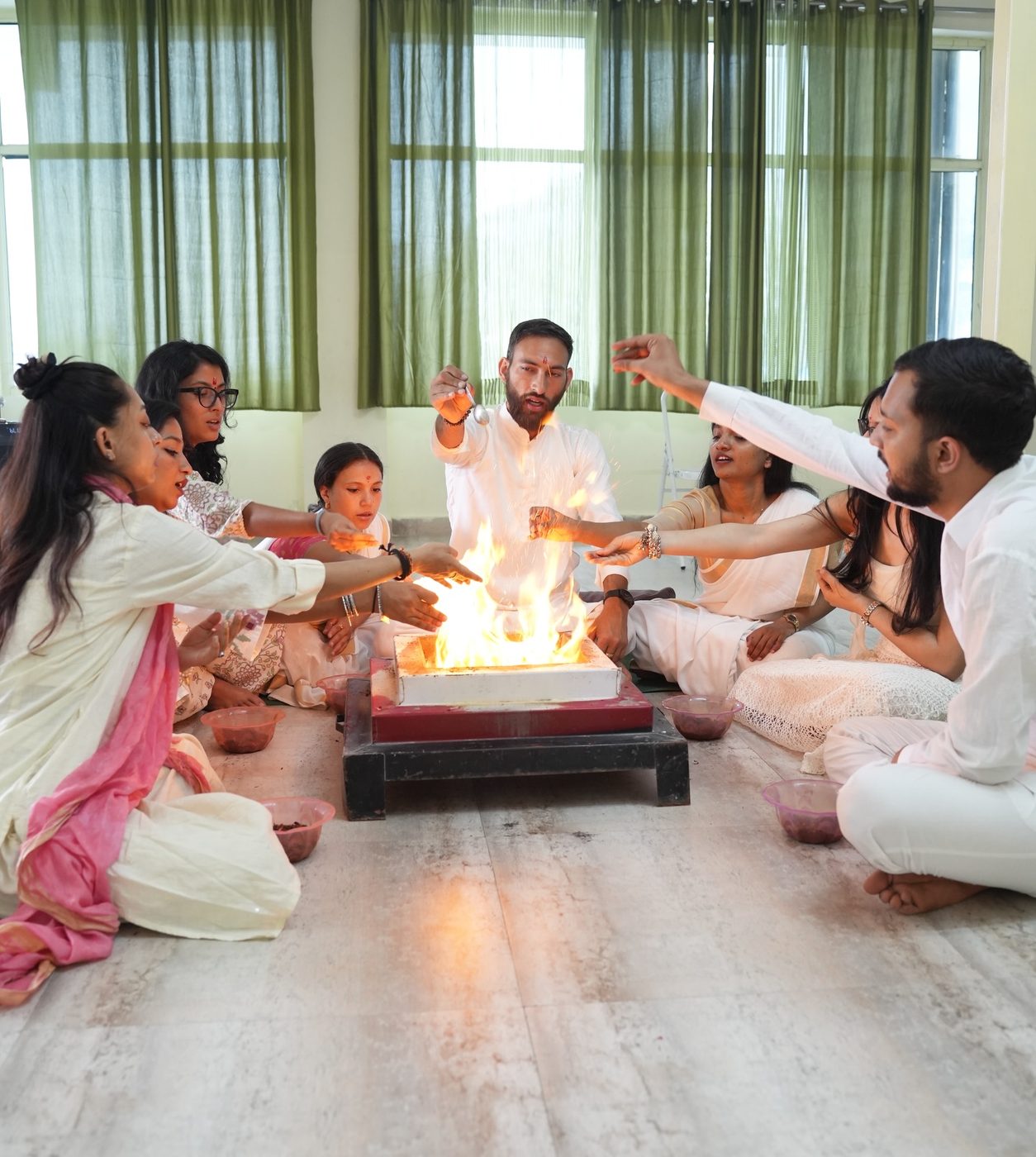
My own path runs through retreat spaces. I completed my 200- and 300-hour teacher trainings at an ashram in Rishikesh — months of daily sadhana on the banks of the Ganga, closed with a sacred fire ceremony. What I build into every Soul Bloom weekend is a small, honest taste of what those months gave me: structure that holds you, and space that frees you.
The next retreat is a weekend by the Ganga in Rishikesh this September — three days, two nights, all meals and stay included, and the full details are on the retreats page. Prices are published openly, because I would want that as a guest too.
If you are hesitating, hesitate in my inbox — message me and ask anything. The people who almost didn't come are, reliably, the ones who cry a little on Sunday and book the next one.